
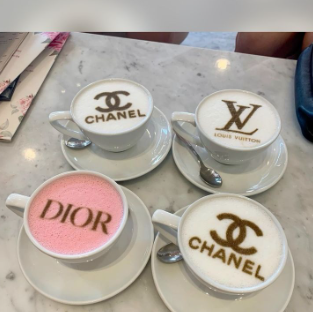
Dior, Chanel, Louis Vuitton and Prada: When Luxury Becomes a Cup of Coffee
From haute couture to cappuccino, the world’s most prestigious fashion houses are transforming everyday rituals into luxury experiences — but does enjoying the glamour of a famous brand really require a fortune?
Imagine walking into a café where the elegance of a fashion house extends from the décor to the tableware, where a beautifully presented pastry feels like a miniature work of art, and where a simple coffee becomes an occasion in itself. You may not be shopping for a designer handbag or a couture dress, but for a brief moment, you can step into the world that made the brand famous.
This is the growing appeal of luxury hospitality. Across the high-end market, fashion and lifestyle brands are exploring cafés, restaurants and other experiences that allow customers to engage with their universe beyond the traditional boutique. The idea is seductive: what if a taste of luxury no longer required buying luxury fashion?
The answer, however, is more interesting than it first appears. A coffee may cost a fraction of a designer accessory, but the experience can carry the same visual identity, symbolism and carefully cultivated atmosphere that make luxury brands desirable in the first place.
Dior: couture served on a plate
Dior offers one of the clearest examples of how fashion and gastronomy can meet. At its historic 30 Montaigne address in Paris, the house has developed a hospitality experience that includes a café, a pastry destination and the Monsieur Dior restaurant. Its culinary direction brings together the creativity of chef Yannick Alléno and the visual codes of the maison.
The idea is to translate couture into another sensory language. Shapes, textures, flowers and the house’s signature motifs influence the presentation, making the food part of the Dior universe rather than simply a service offered inside a boutique.
Dior has also expanded this approach internationally. In 2025, Café Dior opened in Chengdu, China, with a menu created by celebrated chef Anne-Sophie Pic, whose desserts draw inspiration from the fashion house’s heritage.
Louis Vuitton: coffee meets culture
In New York, Louis Vuitton has taken the concept into a striking new setting. Its destination at 6 East 57th Street features Le Café Louis Vuitton, a library café on the fourth floor, alongside a chocolate shop and retail spaces. The brand describes the café as its first library café in the United States, combining books, food and a distinctive interpretation of luxury hospitality.
The concept is particularly revealing because it expands the brand beyond fashion and travel accessories. Visitors can encounter the house through design, reading and gastronomy, creating a more layered experience than a conventional shopping visit.
The coffee is part of the attraction, but so is the opportunity to occupy a space that feels unmistakably Louis Vuitton.
Prada: the elegance of Italian pastry
Prada’s connection to the world of coffee and sweets takes a different route. Rather than simply placing a Prada logo above a café, the group owns Marchesi 1824, a historic Milanese pastry house founded in 1824. Its offering includes pastries, chocolates, panettone and coffee, served in elegant surroundings that combine Italian tradition with contemporary sophistication.
This is an important distinction: the Prada Group’s hospitality presence includes a separate, heritage pastry brand, not merely a café operating under the Prada fashion label.
Marchesi’s appeal lies in the meeting of craftsmanship and atmosphere. Its history predates modern luxury branding, giving the experience a sense of continuity that cannot be manufactured overnight. A cappuccino and a pastry become an invitation to experience a little of Milan’s longstanding café culture.
Chanel: when the café becomes an experience
Chanel illustrates another side of the trend: the temporary café-inspired brand experience.
In September 2026, the house introduced Café Mademoiselle in New York as part of the launch of its Coco Mademoiselle Crush Absolu fragrance. The pop-up recreated the atmosphere of a Parisian café, using the setting to invite visitors to discover the fragrance and related beauty products. It was a limited-time activation, not evidence of a permanent Chanel café network.
That distinction reveals the flexibility of the strategy. A luxury house does not necessarily need to operate a restaurant year-round to benefit from the emotional appeal of hospitality. A temporary space can turn a product launch into a social occasion, create memorable images and encourage visitors to interact with the brand in a less conventional way.
In this case, the café is as much about discovery and atmosphere as it is about coffee.
The business behind the beautiful cup
Why are luxury brands investing in experiences that appear so far removed from their core products?
Because a café can introduce the brand to people who might never enter a boutique intending to buy a handbag, coat or piece of jewelry. It creates a lower-cost point of contact, encourages visitors to stay longer and gives them something to share with friends or on social media.
This is part of a wider movement toward experiential retail, in which shopping is combined with food, art, architecture and cultural programming. Luxury companies are competing not only for customers’ money but also for their time, attention and emotional attachment.
Yet the phrase luxury for everyone needs a little perspective. A cup of coffee may be far more affordable than a designer bag, but premium cafés can still charge premium prices. Nor does a temporary pop-up necessarily offer the same experience as a permanent restaurant. The door may be easier to open, but the world behind it remains carefully curated.
The commercial challenge is to make the experience genuinely worthwhile. A beautiful interior can attract attention, but quality, service and consistency determine whether the brand earns a customer’s lasting appreciation.
The luxury of an ordinary moment
Perhaps the most appealing aspect of this trend is its ability to transform something familiar into something memorable. Coffee is one of the world’s most everyday pleasures. It is part of morning routines, business meetings, reunions and long conversations with friends.
Place that ritual inside an environment shaped by a renowned fashion house, and it acquires a new layer of meaning. The setting becomes part of the pleasure; the cup becomes a small souvenir of the experience; the visit becomes a story worth telling.
This is not the same as owning a piece of haute couture, and it does not pretend to be. It offers something different: a brief encounter with the aesthetics and imagination of a luxury brand, without the commitment of a major purchase.
For consumers, that can be an appealing proposition. For fashion houses, it is an opportunity to turn recognition into participation.
The next time someone says that luxury is only for those who can afford its most expensive products, consider the café. You may not leave with a new designer bag, but you might leave with a beautiful memory, an excellent pastry and a photograph of an afternoon that felt a little out of the ordinary.
Sometimes, the most effective luxury is not the one you take home. It is the one you get to experience — one cup at a time.