
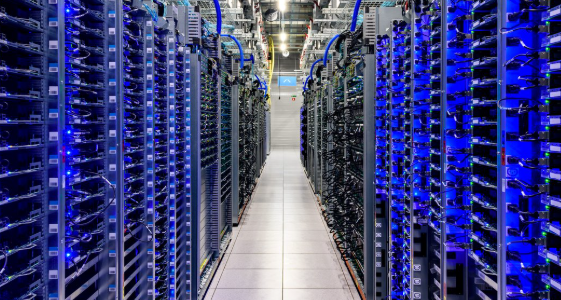
Data Centers: The New Strategic Territory of the Digital Age
The world’s most strategic assets are no longer limited to military bases, ports, energy reserves, and transportation networks. Increasingly, they include facilities that many people never see but depend on every day: data centers. Behind online banking, government services, artificial intelligence, satellite communications, and global commerce lies a vast physical infrastructure that is quietly reshaping the meaning of national security.
Data centers are the operational backbone of the digital economy. They store, process, and distribute the information that allows modern societies to function. As artificial intelligence becomes more deeply integrated into industry, scientific research, public administration, and defense, these facilities are acquiring a new strategic significance. The ability to process information securely, reliably, and at scale is becoming an important source of national competitiveness and technological power.
This transformation raises a fundamental question: who controls the infrastructure that powers the digital world?
Digital sovereignty is often discussed in terms of data ownership, privacy legislation, and technological independence. Yet genuine sovereignty also depends on the physical systems behind digital services: where computing infrastructure is located, who operates it, which technologies it relies on, how it is connected to communication networks, and whether it can remain operational during a crisis. Building a data center within national borders does not automatically guarantee independence if critical components, operational expertise, or essential services remain subject to external constraints.
The connection between data centers and national defense is particularly significant. Modern military organizations increasingly depend on secure computing, intelligence analysis, satellite data, logistics systems, and artificial intelligence. These capabilities require resilient infrastructure capable of supporting complex operations while protecting sensitive information. Data centers are therefore becoming part of the broader strategic ecosystem that supports defense readiness, although their importance varies according to their ownership, security arrangements, and operational role.
The same infrastructure is essential to civilian resilience. Hospitals, financial institutions, emergency services, transportation networks, and public agencies all rely on digital systems. A serious disruption can affect far more than access to websites or cloud applications. It can interfere with essential services, delay decisions, and undermine the continuity of economic activity. Protecting data centers consequently requires an integrated approach that combines cybersecurity, physical security, reliable energy supplies, redundant communications, and effective contingency planning.
Energy has emerged as another defining element of this strategic equation. Advanced computing and artificial intelligence require substantial electricity, while cooling systems and other operational needs place additional demands on infrastructure. The expansion of data centers must therefore be accompanied by responsible energy planning, modern power grids, and investments in efficiency. Water availability, environmental conditions, and the needs of surrounding communities also deserve careful consideration. Strategic infrastructure is most valuable when it strengthens national capabilities without undermining the resilience of the society it serves.
Geography matters as well. The location of a data center can influence its access to electricity, fiber-optic networks, skilled professionals, and suitable environmental conditions. Geographic diversification can improve resilience by reducing dependence on a single facility or region. When combined with secure international connectivity, this approach can help countries maintain essential digital services even when individual systems experience disruptions.
For Brazil, these developments offer an opportunity to connect digital infrastructure with a broader vision of national development. The country’s potential in renewable energy, its large domestic market, its scientific institutions, and its participation in international communication networks create important foundations for expanding technological capacity. A forward-looking strategy could strengthen local expertise, encourage research and innovation, attract responsible investment, and improve the security of critical digital services.
Realizing this potential requires cooperation among government institutions, universities, infrastructure operators, technology companies, and the defense community. Clear regulatory frameworks, skilled professionals, cybersecurity standards, and long-term infrastructure planning can help transform data centers from commercial facilities into reliable foundations for economic resilience and technological progress.
The challenge is not simply to build more computing capacity. It is to ensure that this capacity remains secure, sustainable, accessible, and aligned with national priorities. Countries that understand the relationship between digital infrastructure, energy security, technological independence, and international cooperation will be better positioned to navigate the next stage of the digital transformation.
In the twenty-first century, strategic territory extends beyond land, sea, and air. It also encompasses the physical foundations of the digital world. Data centers may not resemble traditional instruments of national power, but their influence on economies, institutions, and defense capabilities is becoming increasingly difficult to ignore.
The nations best prepared for the future will be those that recognize a simple strategic truth: protecting the digital world begins with securing the infrastructure that makes it possible.