
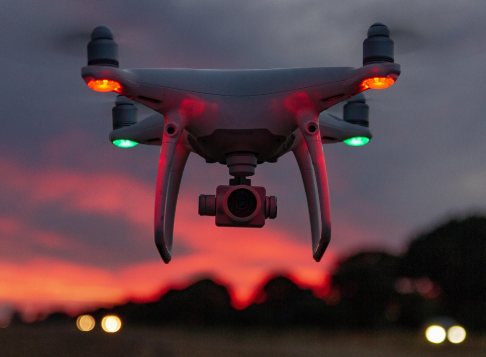
Drones and the New Balance of Power: How Asymmetric Technology Is Transforming Defense
In modern warfare, superiority is no longer measured exclusively by the size of an army, the number of tanks, or the sophistication of traditional weapons. Increasingly, a smaller, more agile, and technologically prepared force can achieve significant strategic advantages through innovation. Among the technologies driving this transformation, unmanned aerial vehicles, commonly known as drones, have emerged as a powerful example of asymmetric defense.
Drones are changing the relationship between cost, capability, and operational effectiveness. Systems that once required substantial financial resources, specialized aircraft, and extensive logistical support can now be complemented by smaller unmanned platforms equipped with cameras, sensors, and advanced communication technologies. This evolution is expanding access to aerial observation and creating new opportunities for countries seeking to strengthen their defense capabilities while making more efficient use of limited resources.
The strategic significance of drones lies not simply in their ability to fly without a pilot, but in the possibilities they create. They can support intelligence gathering, border surveillance, search-and-rescue missions, disaster assessment, maritime monitoring, and the protection of critical infrastructure. In military environments, they can provide situational awareness, helping commanders better understand changing conditions while reducing the need to expose personnel to certain risks.
This is the essence of asymmetric capability: using innovation to offset conventional disadvantages. A technologically adaptable force can challenge established assumptions by combining relatively affordable systems with reliable communications, skilled operators, effective intelligence, and rapid decision-making. However, the effectiveness of these systems depends on much more than the platforms themselves. Training, maintenance, cybersecurity, electronic protection, and integration with broader defense networks remain essential.
The proliferation of drones also presents important challenges. Electronic warfare, signal disruption, navigation interference, and the increasing availability of counter-drone technologies demonstrate that every new capability generates a corresponding need for adaptation. The future advantage will therefore belong not necessarily to those who possess the largest number of drones, but to those who can integrate them responsibly into a resilient and well-coordinated defense architecture.
For emerging defense industries, this transformation creates opportunities to advance research, develop domestic technological expertise, and strengthen cooperation between governments, universities, and private companies. Investments in autonomous systems, artificial intelligence, secure communications, and counter-drone solutions can contribute to industrial development while reinforcing national technological sovereignty.
For countries such as Brazil, the subject has particular relevance. Protecting extensive land borders, a vast maritime domain, remote regions, and critical infrastructure requires innovative approaches that combine surveillance, intelligence, and efficient resource allocation. Responsible investment in unmanned technologies, supported by research and international partnerships, can contribute to these objectives.
Ultimately, drones illustrate a broader lesson about the future of defense: innovation can redistribute strategic advantages and open new possibilities for nations willing to invest in knowledge, adaptability, and technological development. The challenge is to ensure that these capabilities remain subject to responsible command, international law, and clear ethical standards.
In the new era of defense, technological ingenuity is becoming a strategic asset. The greatest advantage will belong to those who combine innovation with sound judgment, preparedness, and a commitment to security and peace.