
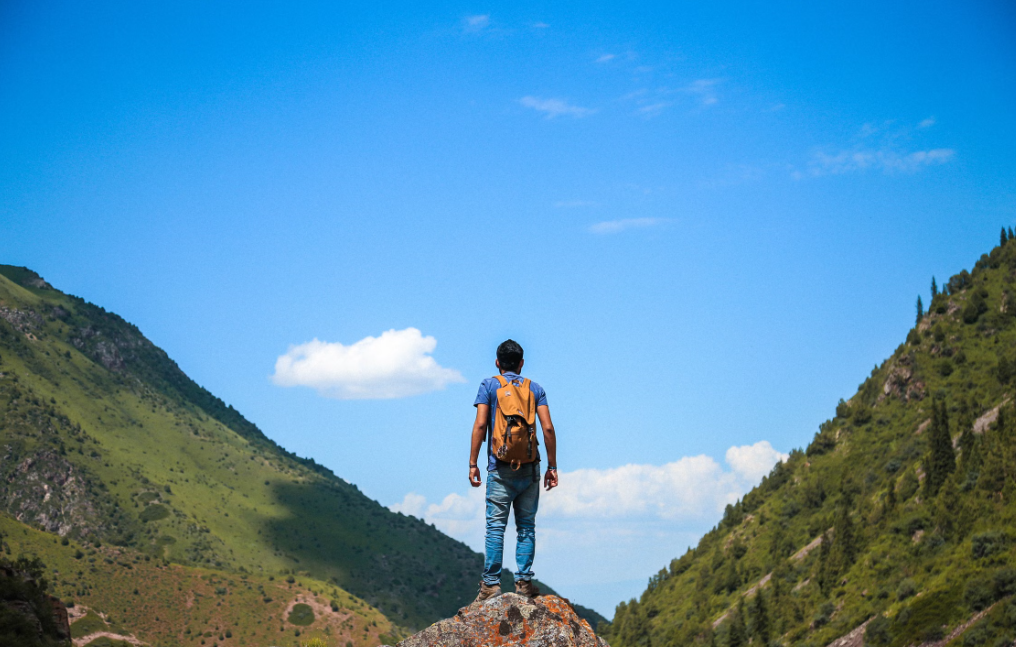
The Art of Traveling Light: Why Becoming a Backpacker Is About More Than Seeing the World
There is something extraordinary about a person who decides to explore the world with a backpack, a few essential belongings, and the courage to discover what lies beyond the familiar. At first glance, backpacking may look like a way to travel inexpensively. But for many people, it represents something much deeper: the ability to let go, embrace uncertainty, and experience life without allowing possessions, routines, or expectations to dictate every step.
Becoming a backpacker is not simply a matter of choosing a destination. It is a decision to travel differently, sometimes with little more than what can be carried on one’s back. Every item must justify its place. Every unnecessary object becomes a reminder that we often accumulate far more than we actually need. Somewhere between packing and departure, a lesson begins to emerge: freedom is not always about having more choices, but about needing less to feel complete.
Of course, life rarely offers the luxury of abandoning everything. There are careers to build, bills to pay, families to care for, and commitments that deserve to be honored. That is precisely what makes the spirit of backpacking so interesting. The ability to travel light does not necessarily belong to someone without responsibilities. Sometimes, it belongs to someone who has learned how to carry those responsibilities without allowing them to become the entirety of life.
There is a particular kind of courage in stepping outside a carefully organized routine. When traveling independently, not everything can be predicted. Trains are missed, plans change, unfamiliar languages create unexpected challenges, and strangers sometimes become the most memorable part of a journey. Without the comfort of knowing exactly what comes next, travelers learn to adapt, ask for help, trust their judgment, and discover resources they may never have realized they possessed.
This is where backpacking becomes a metaphor for living.
We often spend years preparing for the moment when life will finally become convenient enough to enjoy. We wait for the right financial circumstances, the perfect schedule, the completion of another obligation, or the arrival of a future that seems perpetually just beyond reach. Meanwhile, the world continues to turn, and opportunities pass quietly through the spaces between our plans.
The backpacker offers a different perspective. Life does not have to be perfectly arranged before it can be experienced. There is room for discovery even when circumstances are imperfect. A journey can begin with careful preparation, but it also requires the willingness to accept that not every detail will unfold as expected.
Detachment, however, should not be confused with irresponsibility. True freedom is not the absence of commitments; it is the ability to distinguish between what genuinely matters and what we carry merely out of habit, fear, or social expectation. A person can love deeply, work seriously, fulfill obligations, and still preserve an inner space that belongs entirely to them.
Travel also has a way of rearranging our priorities. When familiar surroundings disappear, many of the things that once seemed urgent begin to lose their importance. A conversation with someone from another culture, a sunrise in an unfamiliar landscape, or the simple experience of finding one’s way through a foreign city can offer a sense of perspective that no shopping list or professional achievement can provide.
The world becomes both a classroom and a mirror. We discover how other people live, what they value, how they face difficulties, and how much of our own thinking has been shaped by the environment in which we grew up. Sometimes, the greatest distance we travel is not measured in kilometers, but in the distance between who we were before leaving and who we become along the way.
Not everyone needs to cross continents with a backpack to embrace this philosophy. For some, freedom means taking a solo trip. For others, it means learning a new language, changing careers, spending less time chasing approval, or finally making room for an experience that has been postponed for years. The essential element is the same: the willingness to remain curious, accept uncertainty, and resist the idea that life must follow a single predetermined script.
Perhaps the most beautiful lesson of backpacking is that traveling light begins long before we leave home. It begins when we stop confusing possessions with security, busyness with purpose, and predictability with happiness. It begins when we recognize that responsibility and freedom can coexist, provided we make conscious choices about how we live.
The person who travels the world with a backpack does not necessarily have fewer worries or fewer obligations. But that person may have discovered something valuable: not everything deserves to be carried everywhere.
Ultimately, the greatest journey is not about escaping the life we have built. It is about becoming free enough to experience it fully. Sometimes, all it takes is a little less baggage, a little more courage, and the decision to take the first step.